The Focus Fix
Practical tools for reclaiming your attention. No lectures, just what works.
Focus & Habits
The Simple Framework That's Helping Young People Take Their Attention Back (Without Deleting a Single App)

If you've reached for your phone before your eyes are even fully open, read this.
If you've opened an app, closed it, and opened it again ten seconds later without deciding to, read this.
If you've lost an entire evening to your phone and can't remember what you were even looking at, read this.
You are not lazy. You are not weak. You are not broken.
Your phone was built by people whose full-time job is making sure you can't put it down. You are not losing a fair fight.
But here's the part that actually hurts. It's not the hours. Hours you can get back.
It's the assignment you didn't finish. The conversation you weren't really in, because you were half-checking your phone under the table. The promise to yourself: "just twenty minutes tonight." The one you've broken so many times you've stopped believing yourself.
You've tried the obvious things. App timers you swipe past by day three. Deleting an app and reinstalling it a week later. Leaving your phone in another room. Until you get up and go get it.
None of it touched the actual problem. It just moved the phone a little further away. It never changed what was pulling you toward it in the first place.
I know. I lived inside that loop for two years before I found a way out.

My name is Kim Krooz. I'm not a therapist. Not a doctor. I'm someone who spent two years watching my own screen time climb while telling myself I'd sort it out "next week."
It started small. Checking my phone "just for a second" while I was supposed to be studying. Then it wasn't a second anymore.
I noticed it first in my grades, then in the way people talked to me. I'd be sitting right there and someone would say my name twice before I looked up.
So I tried the standard fixes. Screen time limits, ignored within a week. Grayscale mode, I stopped noticing the grey within days. Leaving my phone in a drawer, I just got up and opened the drawer.
I did one of those "digital detox" weekends everyone talks about. White-knuckled it for 48 hours. The moment it ended, I was back on my phone for longer than before.
The actual turning point wasn't a big moment. It was a conversation with a friend who studies how habits actually form, who pointed out something obvious once she said it: I didn't have a willpower problem. Nothing about my day made the phone hard to reach for.
So I started testing small changes, on myself first, then on a few friends who were dealing with the same thing. What worked, I kept. What didn't, I dropped. Eventually it turned into something repeatable enough to write down.
What Actually Changed Things
Here's what that friend explained, in plain terms: your brain didn't develop a "phone addiction." It built a habit loop: cue, routine, reward. The exact same mechanism that lets you tie your shoes without thinking about it.
Willpower tries to fight the habit loop head-on, every single time. That's exhausting, and it's not sustainable. Eventually it loses. Everyone's does, not just yours.
Friction works differently. It doesn't fight the loop. It interrupts it, right at the one moment it's weakest: the half-second between the urge and the reach.
Why "just have more willpower" never works
Your brain treats a habit loop like it treats breathing: automatic, unconscious, running in the background. You can't out-discipline something that's not making a conscious decision in the first place.
What you can do is change the environment the loop is running in. Move the cue. Add a half-second of friction. Give the reward somewhere else to go.
That's the entire shift, broken into four moves: Expose the trigger. Interrupt the scroll. Redirect the craving. Rewire the identity. In that order. Each one only works once the one before it is in place.
It's not that you have no willpower. It's that you've never removed the reasons you don't need any.
The framework itself is simple. No new app to install. No hardware to buy. A handful of five-minute changes to how your phone, your day, and your reach are set up. Done once, adjusted weekly.
What Usually Happens During the 21-Day Challenge
Days 1–3: Nothing dramatic. The old habit is still stronger than the new one. This is normal. It's also where most people give up, right before anything shows.
Days 4–7: The first small shift. Reaching for the phone and, for half a second, noticing the reach instead of following it automatically.
By Day 21: The noticing gets faster than the reaching. A lot of people finish the challenge and realize they forgot to check something they used to check every hour.
The forgetting is the tell. You don't notice progress while it's happening. You notice its absence.
But what people actually write back about isn't the timeline. It's what changed around them: a class they were present for, a conversation they didn't half-hear.
Now Available
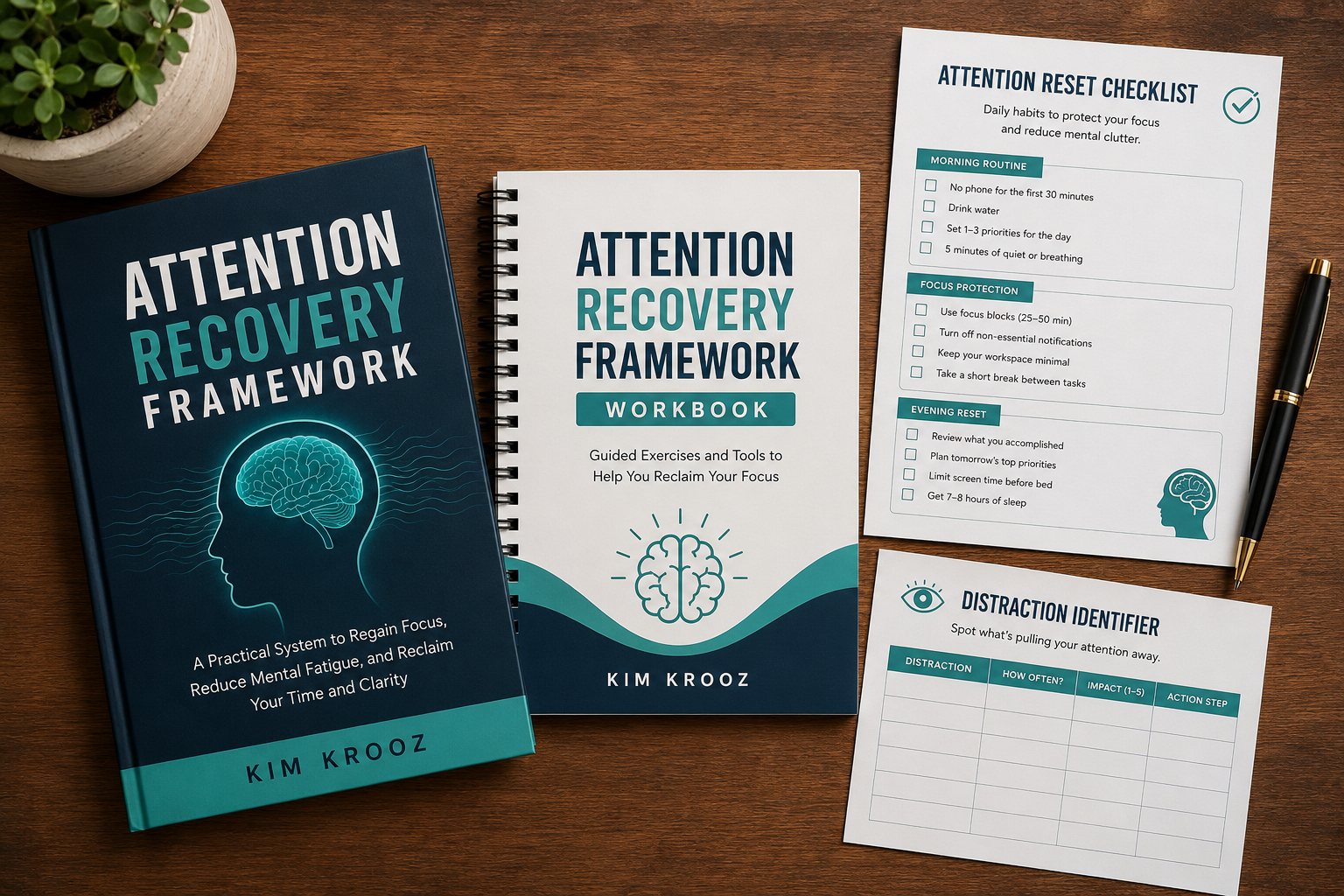
The Attention Recovery Framework™
The 21-day blueprint for rebuilding your focus and taking back control of your attention, even if you've tried and failed before.
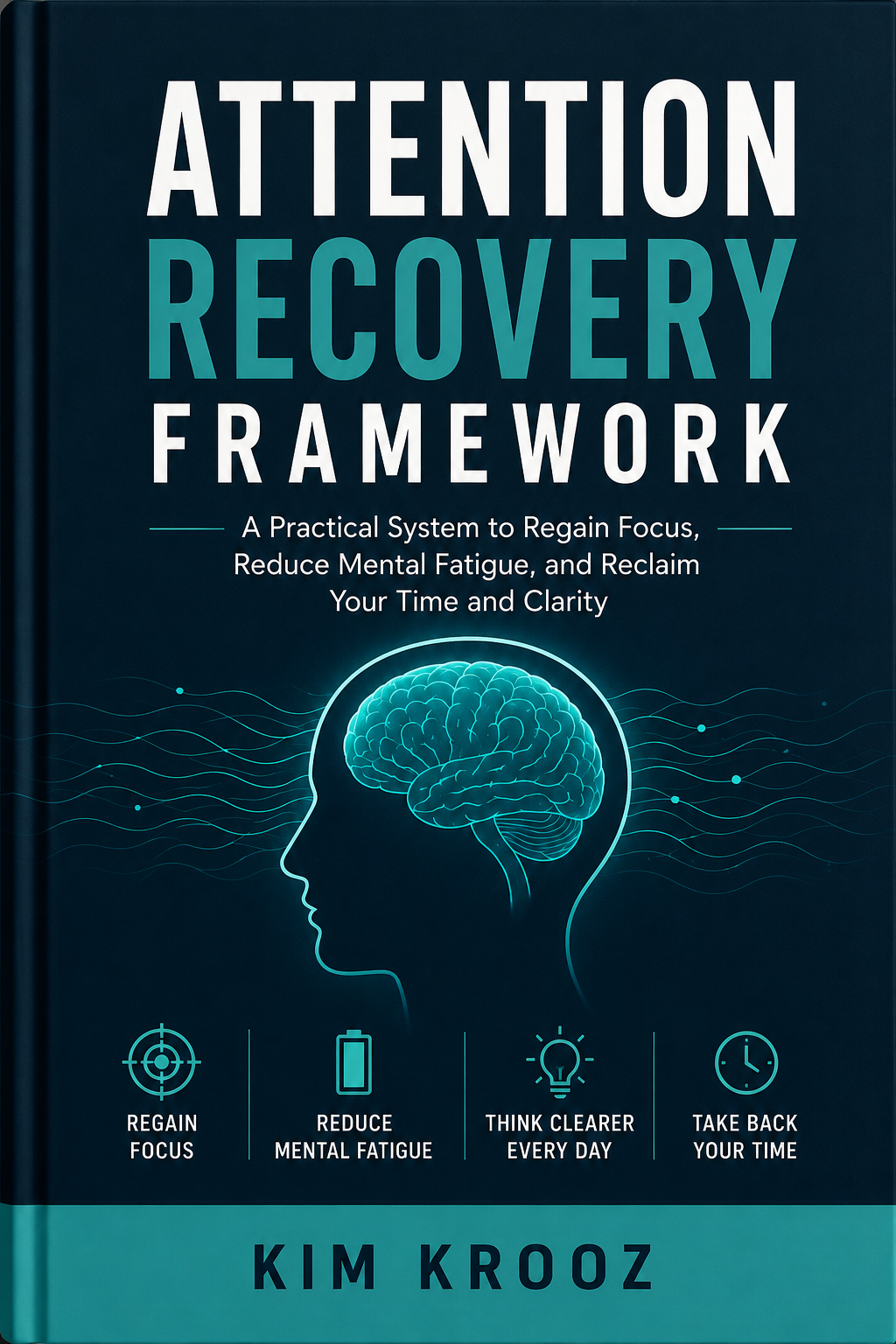
Everything above (the actual steps, the exact order, what to change first) is written up in plain language in one guide, so you can start tonight instead of piecing it together yourself.
- Introduction. Why this guide could change the next five years of your life, not just the next few weeks (Pg. 1)
- Chapter 1: The Lie We Keep Telling Ourselves. Why "I'll just check for five minutes" has never once been five minutes (Pg. 5)
- Chapter 2: Why Nothing Has Worked So Far. The real reason app timers, willpower, and cold turkey keep failing you the same way (Pg. 11)
- Chapter 3: Expose. A simple exercise that finds the specific, invisible triggers running your day (Pg. 17)
- Chapter 4: Interrupt. Exactly how to stop a scroll before it turns into three hours you don't remember (Pg. 23)
- Chapter 5: Redirect. Teaching your brain to crave actual progress instead of the scroll (Pg. 29)
- Chapter 6: Rewire. Becoming the kind of person who doesn't reach for their phone every five minutes, without white-knuckling it (Pg. 35)
- Chapter 7: Your 21-Day Attention Recovery Challenge. The day-by-day plan that turns everything above into a habit that actually sticks (Pg. 41)
- Final Words. What's waiting for you on the other side of one decision (Pg. 48)
You don't need to buy anything extra to follow the framework. It works with settings and things you already own.
Compare That To What You've Probably Already Tried
- Screen-time blocking apps (free, or a small monthly fee). Most people disable them within two weeks because the app becomes one more thing to negotiate with.
- A "digital detox" weekend (free, but temporary). Usage snaps back the moment it ends, sometimes higher than before.
- Grayscale mode or a new phone case (free). Changes how the phone looks, not why you reach for it.
- Deleting and reinstalling the app (free). Lasts until the next time you need "just one thing" from it.
- Motivational content about discipline (free). Feels resolved for an hour, changes nothing structural.
The real cost, the one nobody puts a number on: the hours of your one attention span you don't get back, spent on nothing you'll remember in a year.
How Much Does This Guide Cost?
Putting this together wasn't free. Hours of reading into how habits actually change, testing the framework on real people before writing a single page of it, then enough editing to make sure it reads in five minutes instead of fifty.
A fair price for something that took that long to get right would be more than most people can justify trying for the first time. So instead:
The Attention Recovery Framework
₦5,500
The three bonuses below are attached free for the first 50 people who join this month.
Get The Attention Recovery FrameworkOnce You Tap That Button, Here's What Happens
- You're taken to a secure payment page: card, bank transfer, or USSD.
- You complete the payment.
- The guide lands in your email within a couple of minutes. Check spam if you don't see it right away.
It's me, Kim, running this. If your payment goes through, your guide is guaranteed to reach you.
Wait! Three Things Before You Go
If you're one of the first 50 people to join this month, these come with it, no extra charge.
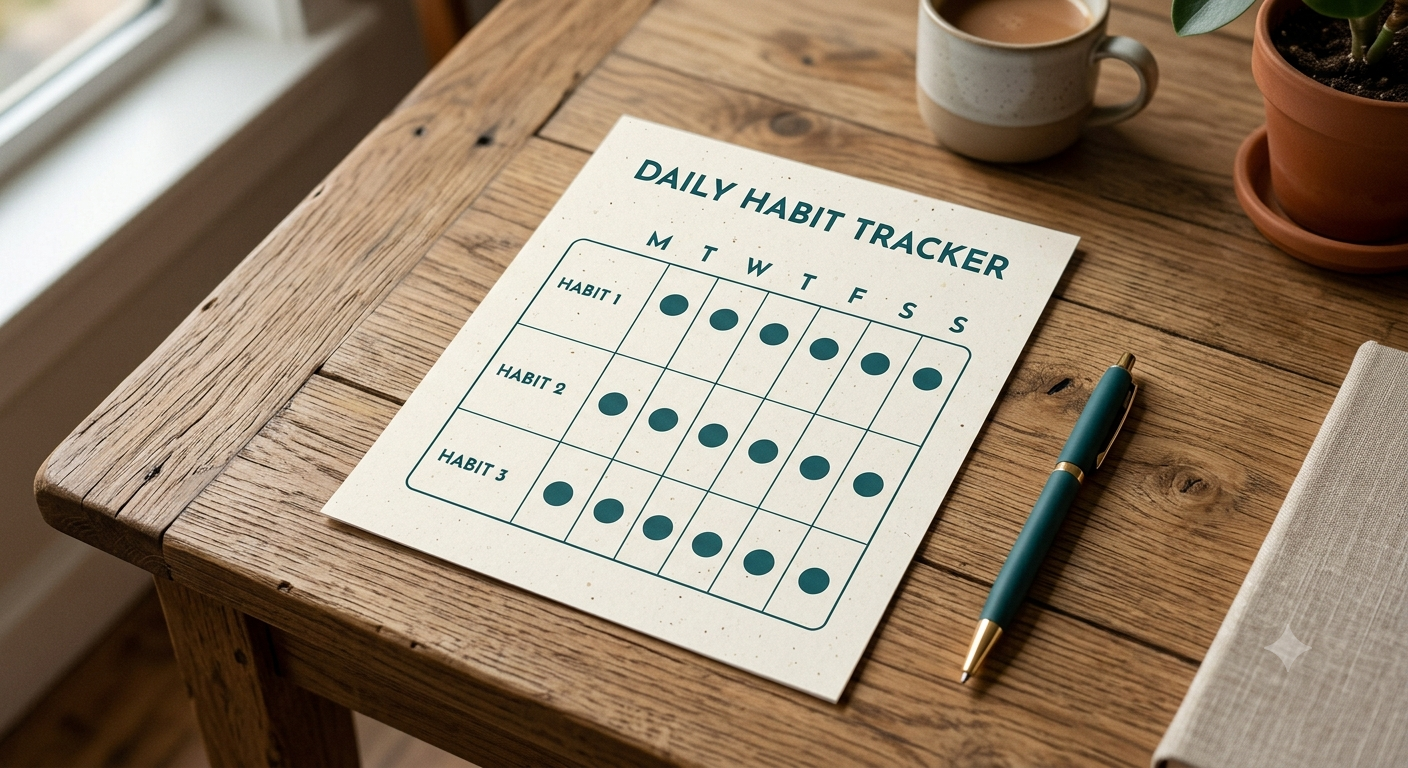
Bonus 1: The 21-Day Attention Recovery Challenge Tracker
Estimated value ₦1,500, free this month
A day-by-day companion for the Chapter 7 challenge, so you're tracking it, not just reading about it.
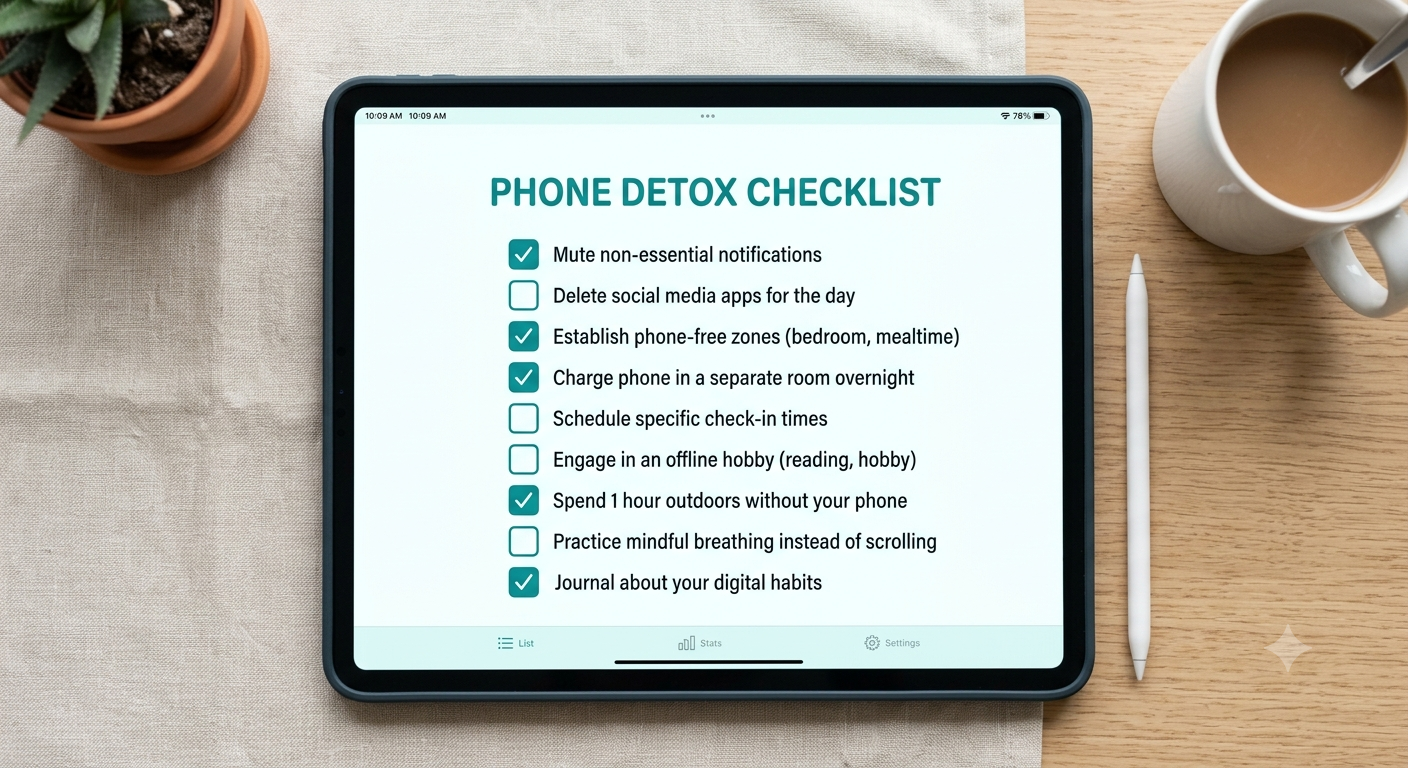
Bonus 2: Phone Detox Checklist (25 Settings That Instantly Reduce Distractions)
Estimated value ₦1,000, free this month
Every setting change from the guide, laid out as one simple checklist you can work through in a single sitting.
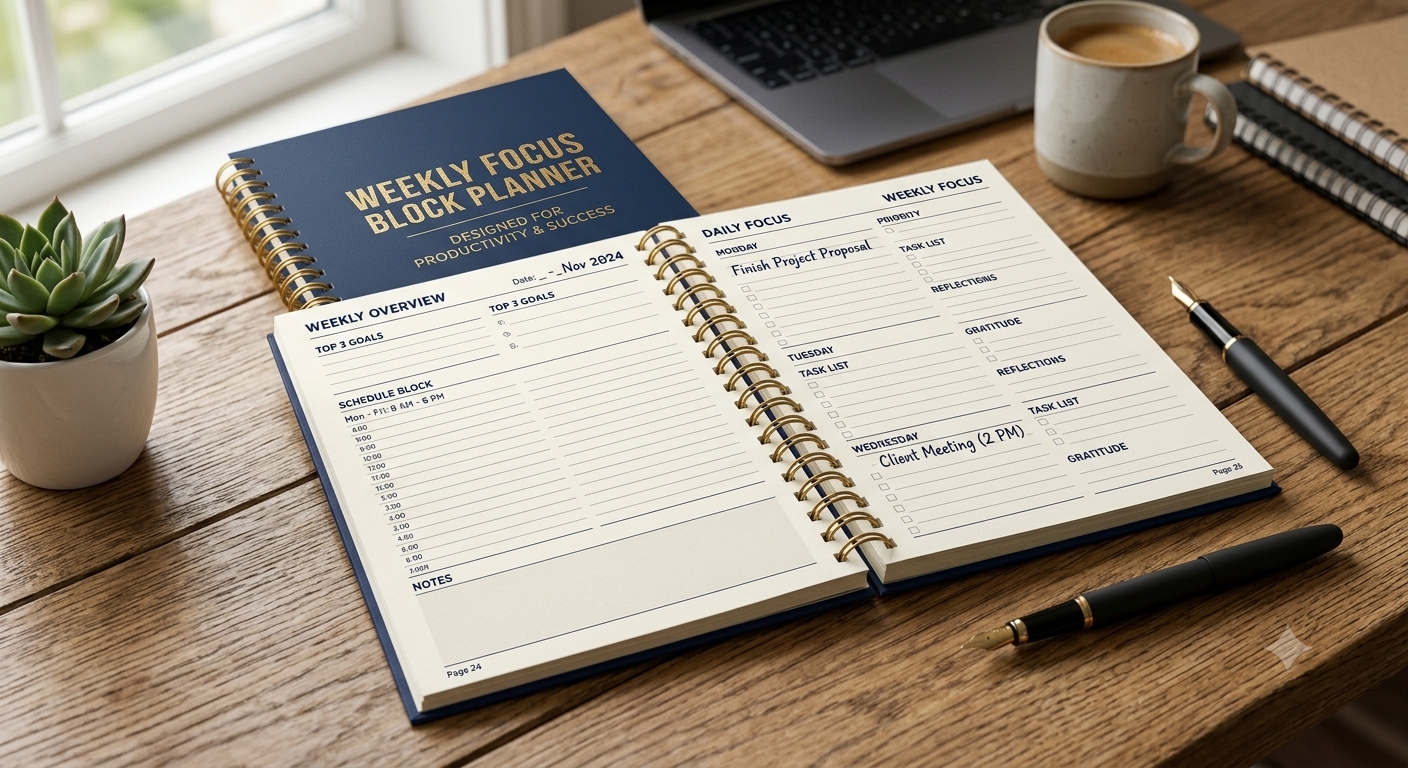
Bonus 3: The Ultimate Focus Planner & Momentum List Workbook
Estimated value ₦2,000, free this month
A workbook for planning your focus blocks and tracking momentum once the 21 days are behind you.
Everything You're Getting Today
What People Are Saying
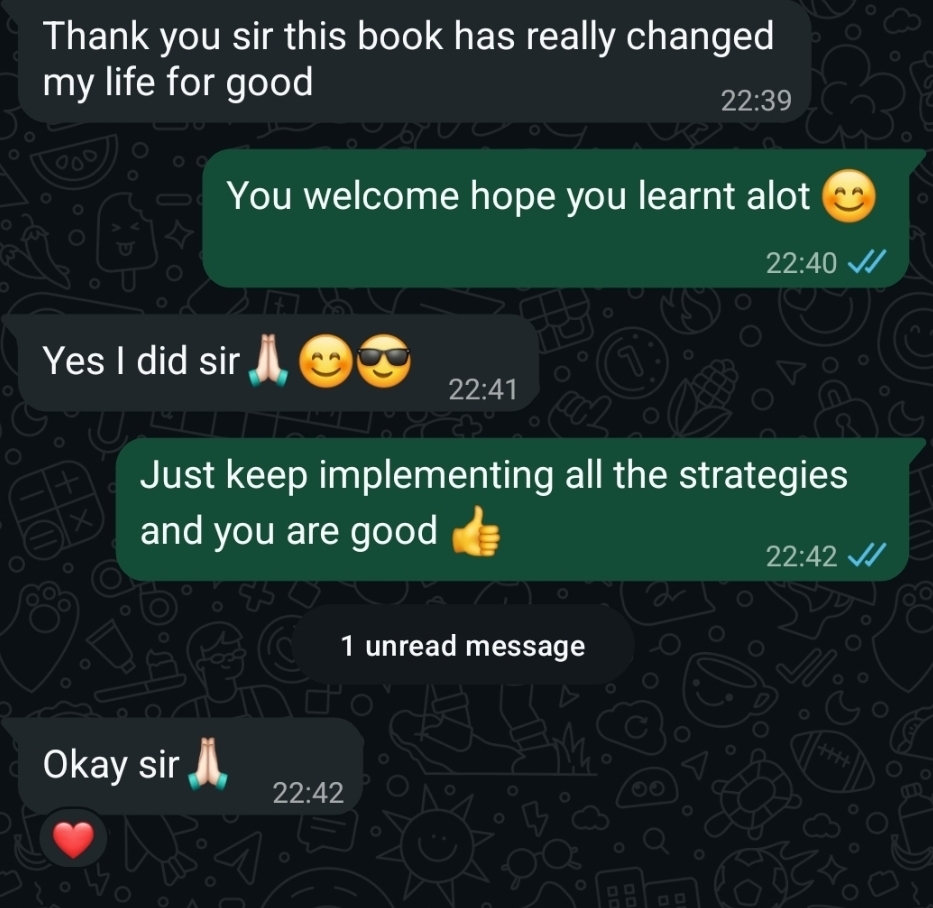
One real review below. Send a second one whenever you have it and I'll add it the same way.
Comments (0)
Be the first to share how it went. Drop a comment once you've tried it.
Right Now, You Have Two Choices
Do nothing
- Still reach for your phone before your feet hit the floor
- Still lose evenings you won't remember
- Still tell yourself "next week"
- Still feel half-present in the room you're actually in
- Nothing changes on its own
Get the framework
- A five-minute-a-day system instead of raw willpower
- A way to notice the reach before you make it
- Your attention back in the moments that matter
- A plan for the days it doesn't go perfectly
- A guarantee, so the risk is on me, not you
The Attention Recovery Framework + Bonuses
₦5,500
One-time payment. Instant delivery. 7-day guarantee.
Get The Attention Recovery Framework7-Day Guarantee
Try the framework for a full week. If you follow it and it does nothing for you, email me and I'll refund you in full. No questions asked.
One Last Thing…
Picture one month from today.
Will you open your phone and put it back down without a second thought? Sit through a class or a meeting without the itch to check? Finish something start to finish, without three detours? Fall asleep without a screen being the last thing you see? Feel like your attention is actually yours again?
Now picture one month from today if you close this page instead. Same reach. Same loop. Same "next week" you've been saying for a while now.
The difference between those two versions of you is a decision you make in the next sixty seconds.
Get The Attention Recovery FrameworkStill on the fence? That's fair. You've probably paid for a fix before that didn't work.
That's exactly why there's a 7-day guarantee. If it doesn't help, you don't keep the risk. I do.
You don't have to be sure. You just have to try it for a week.
P.S.: If you're still unsure, remember: 7-day guarantee, full refund, no questions asked.
P.P.S.: The three bonuses are only attached for the first 50 people this month.
P.P.P.S.: Every day you wait is another day of the same loop. That's the real cost of waiting.
With hope for your focus,
Kim Krooz
Frequently Asked Questions
How do I get the guide after I pay?
It's emailed to you automatically within a couple of minutes of payment. Check your spam folder if it's not in your inbox.
Do I need to delete any apps?
No. Nothing to uninstall, no new app to download. The framework works with settings and habits, not app blockers.
I've tried everything already. Will this actually be different?
Most things you've tried fight willpower. This works on the friction around the habit instead, which is a different lever entirely. That's the whole idea behind it.
How long before I notice a change?
Most people notice something small in the first week. Give it the full seven days before deciding either way.
What if I fall off after a few days?
That's expected, not a failure. The 21-Day Challenge in Chapter 7 has a plan built in for getting back on track without starting over from day one.
Is the guarantee real?
Yes. Email Kim directly and you'll get a full refund within the 7-day window, no questions asked.
This guide is a practical tool, not medical or psychological treatment. If your phone use is tangled up with something heavier (anxiety, low mood, or anything you're struggling to manage alone), it's worth talking to a counselor or doctor too, alongside this.